


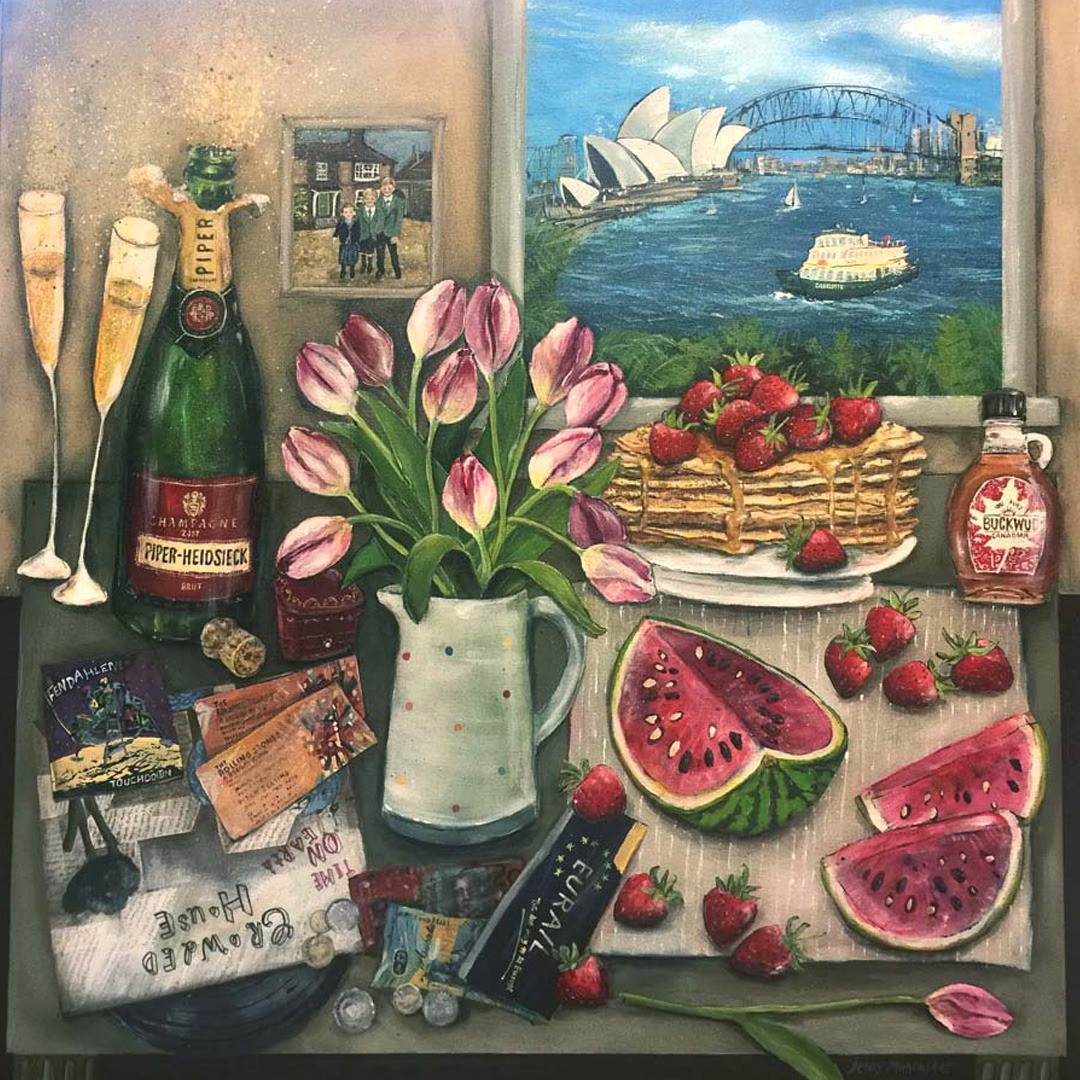
Jenny Muncaster
Jenny Muncaster graduated from Winchester School of Art in 1988 with a Hons Degree in Printed Textiles.
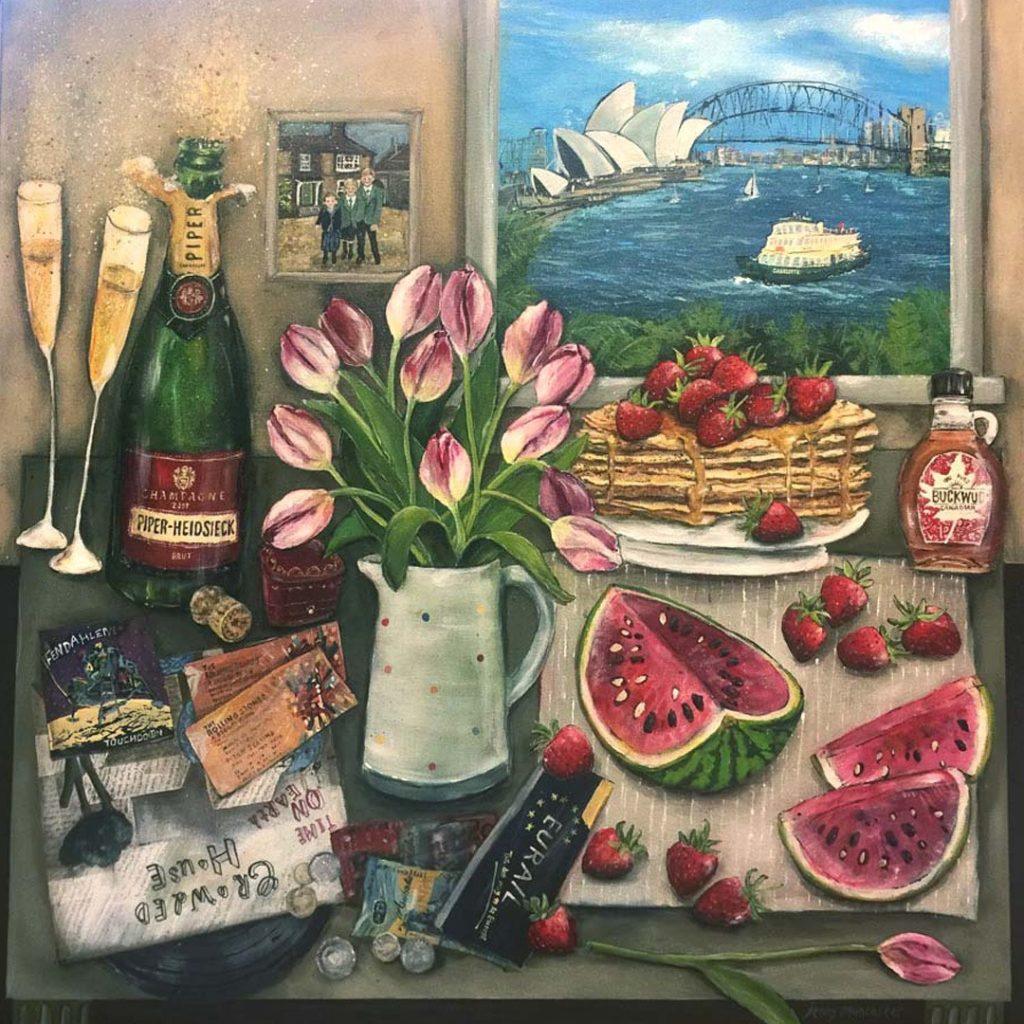
Her work is mainly focused on mixed media and acrylics with her paintings being exhibited and sold internationally. She takes on numerous commissions with food, wine and travel related themes which come from private and corporate clients. More unusual commissions include 22 beautiful hand painted bollards in The Square, Winchester! Jenny works from The Colour Factory Studios and Gallery in Winchester, which she set up in 1994. The studios were originally a park keepers’ cottage, but now house 6 resident artists and is a hub of creativity. People come from far and wide to learn a whole variety of creative skills at the many workshops and classes. Read Jenny’s story on how she became a professional artist by visiting our news section.



Interview with Jenny Muncaster
“’Every child is an artist”
We recently sat down with Jenny Muncaster to hear where her passion for art came from, what was learning in school like, how she started her career, and tips for students looking to start a professional career in art.

How did you start your professional career?
How did you find your niche?
I have discovered so many new paints and mediums in my work as an artist, presenter, and teacher. It is never a bad thing to step out of your comfort zone and try something different. I always encourage an oil painter reluctant to try acrylics to have a go and vice versa, I can honestly say I have never had a disappointed student not try something new if it is taught in the right way!”
Why do you think everyone has an artist in them?
“It is an inherent natural thing in human beings to be creative we are hard-wired to have some sort of creativity in us whether it’s cooking, creating a garden or doing a bit of DIY. I believe that with the right encouragement everyone can discover the fun and pleasure of putting marks and colour on paper whether they think they are any good at it or not. There are so many different forms of art there is something there for everyone – it doesn’t have to be limited to painting and you certainly don’t have to be a Leonardo to enjoy it. This isn’t about technical drawing and creating the perfect perspective this is about fun and having the confidence to have fun. We all had the ability as children to create paintings without inhibition so let’s rediscover it! Sometimes the sheer pleasure of squeezing great clumps of coloured paint from a tube is enough to inspire a reluctant artist!”
What inspired you to pick up a brush and start painting?
“My very earliest memory of seeing a professional artist was when my dad took me to a local craft fair. I was asked to help make a simple print by dipping string in paint, placing it on paper between the pages of a very thick book. I pulled the string free from the pages and on opening the book revealed the most beautiful, printed pattern, which the painted string had left. It sounds so simple now but seeing this was so exciting at the age of 7 years old, I can honestly say it had an effect on me. It was what I call now ‘a WOW moment’, we all need more of these WOW moments, and I try and include them in my teaching and presenting of art to this day.”
Why do you want to share your techniques?
Did you always want to be an artist?
When did your love of art start?
“My love of art, drawing and painting started from an early age, from when I picked up a crayon and made a mark on some paper. I was a real tomboy, I didn’t really like dolls, I spent a lot of time outdoors climbing trees, on my bike and exploring the countryside but what I enjoyed most was colouring & painting. Every birthday or Christmas all I wanted was art stuff, painting, and craft kits, whatever was going on at the time, from ‘Shakermaker’, ‘Dip a Flower’, & Plasticraft (the seahorse embedded in resin keyring was a favourite). I was also obsessed with the TV programme ‘Paint along with Nancy’ with Nancy Kominsky, first televised in 1974. I loved the bit at the end where the painting is shown as a time-lapse from start to finish.”
How did you start your professional career?
How did you find your niche?
I have discovered so many new paints and mediums in my work as an artist, presenter, and teacher. It is never a bad thing to step out of your comfort zone and try something different. I always encourage an oil painter reluctant to try acrylics to have a go and vice versa, I can honestly say I have never had a disappointed student not try something new if it is taught in the right way!”
Why do you think everyone has an artist in them?
“It is an inherent natural thing in human beings to be creative we are hard-wired to have some sort of creativity in us whether it’s cooking, creating a garden or doing a bit of DIY. I believe that with the right encouragement everyone can discover the fun and pleasure of putting marks and colour on paper whether they think they are any good at it or not. There are so many different forms of art there is something there for everyone – it doesn’t have to be limited to painting and you certainly don’t have to be a Leonardo to enjoy it. This isn’t about technical drawing and creating the perfect perspective this is about fun and having the confidence to have fun. We all had the ability as children to create paintings without inhibition so let’s rediscover it! Sometimes the sheer pleasure of squeezing great clumps of coloured paint from a tube is enough to inspire a reluctant artist!”
Products Used

Simply Acrylic Paint Wood Art Creative Set

Simply Acrylic Paint Pouring Art Creative Set

Simply Acrylic Paint Rock Art Creative Set

Simply Gouache Paint Masking Tape Creative Set
-
Acrylics
Simply Acrylic Paint Wood Art Creative Set
Simply Creative Sets offer a focused selection of project-based kits designed to encourage creativity and experimentation. Each set includes a clear step-by-step guide and access to three online tutorials, providing straightforward instruction for completing a range of themed projects. The Wood Slice Painting Creative Set contains all the materials needed to complete the included designs, […]LEARN MORE -
Acrylics
Simply Acrylic Paint Pouring Art Creative Set
Simply Creative Sets are project-based kits designed to spark creativity and encourage experimentation with different techniques and materials. Each set includes a comprehensive step-by-step guide and access to three online video tutorials, making it easy for beginners to follow along and build confidence. The Pouring Art Creative Set contains all the essential materials to complete […]LEARN MORE -
Acrylics
Simply Acrylic Paint Rock Art Creative Set
Simply Creative Sets offer a selection of project-based kits designed to spark creativity and make art approachable for all. Each set includes a detailed step-by-step guide along with access to three online video tutorials, offering clear instruction and inspiration for completing each project. The Rock Painting Creative Set contains all the materials needed to complete […]LEARN MORE -
Gouaches
Simply Gouache Paint Masking Tape Creative Set
The Simply Masking Tape Creative Set is a hands-on, project-based kit designed to inspire beginner artists and hobbyists. It includes everything needed to complete three creative projects using masking techniques, with all the essential materials provided in one convenient set. Whether you’re new to painting or looking for a guided activity to explore, this set […]LEARN MORE
How to's & Collaborations
-
 Colour Lab
Discover System3 Acrylic, FW Acrylic and Aquafine Watercolour Inks with Jenny Muncaster
Explore the effects of all 3 different types of Daler-Rowney Inks – a fascinating workshop providing you with plenty of information, advice and demonstration of the inks with different tools. -
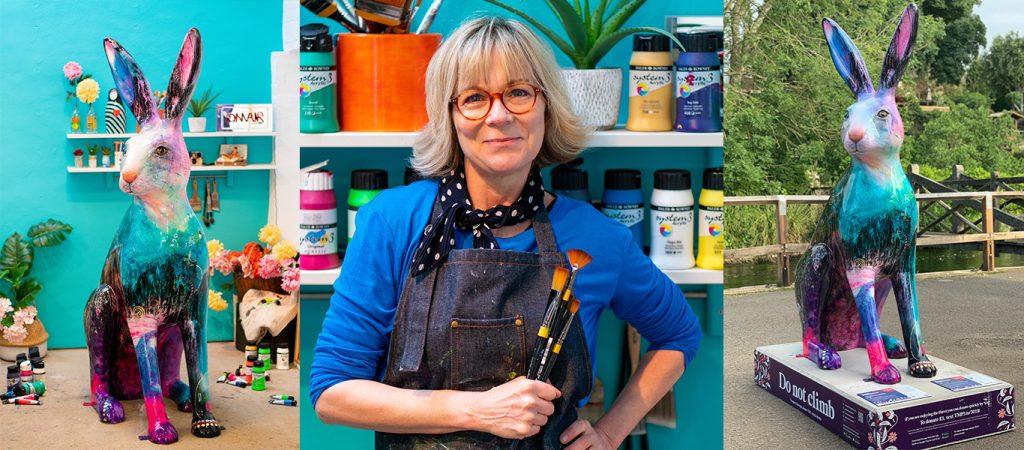
Hares of Hampshire Art Trail x Jenny Muncaster
Jenny Muncaster, a professional mixed-media artist and one of our Daler-Rowney artists, has taken part in one of the largest public art events in Hampshire, UK. -
 Colour Lab
#simplycreate Creative Masking Tape Art Set
You can get some really eye-catching results with Tape Art. It’s really simple to do, but really effective & it’s a technique that I use in my own work. -
 Colour Lab
#simplycreate Creative Pouring Art Set
This pouring kit comes with a warning – it’s completely addictive! Honestly, this is so much fun and what’s great is all the colour & pouring medium come premixed & ready to go. -
 Colour Lab
#simplycreate Creative Rock Painting Art Set
Stone painting! It is so relaxing to do & the results are beautiful – I just think they just look stunning. -
Colour Lab
#simplycreate Creative Wood Slice Art Set
"I love this kit – it’s one of my favourites! The little mini paintings are completely doable, you’re just following step by step. I’m breaking down the process of the painting showing lots of techniques… it’s really easy! -
 Colour Lab
#simplycreate Activity Set Acrylic Countryside Flowers
Learn how to use acrylic paints with the Simply Flower Painting Activity Set. This set includes the template, paint brushes, palette knife and acrylic paint needed to create countryside flowers! -
 Colour Lab
#simplycreate Activity Set Feather Colour Splash
Learn how to use watercolour pencils and double-tip markers with the Simply Feather Drawing Activity Set.

Find a Store Near You
Our products are available in thousands stores nationwide. Use our Store Locator to find your nearest retailer and explore our network of trusted art supply specialists. Visit in person to experience the quality firsthand, receive expert advice, and shop your favourite Daler-Rowney products locally.

Contact Us
Got a question? Start by browsing our FAQs for quick answers. If you can’t find what you’re looking for, get in touch by selecting the form that best matches your enquiry. We’d love to hear from you and are always happy to assist!


