


System3 Acrylic Collection
Unmatched Versatility, Unrivalled Quality
Crafted in the UK using professional-grade resin and high-quality pigments, System3 Acrylics deliver consistent, reliable performance across a wide range of applications. With strong pigment loading, colours remain vibrant whether applied straight from the tube for bold, opaque coverage or thinned down to subtle, fluid washes. Once dry, they form a durable, water-resistant film that stands up to both studio work and more demanding environments.
Acrylic is one of the most adaptable painting mediums, valued for its fast drying time, colour intensity, and ability to work across multiple surfaces. System3 builds on this versatility with a complete, fully compatible range, including Original Acrylic, Heavy Body Acrylic, Fluid Acrylic, Acrylic Inks, and Screen Printing & Textile Inks. Supported by dedicated mediums, brushes, pads, and artboards, the range allows artists to move easily between techniques, from expressive, textured work to detailed illustration and print.
Designed to adhere to surfaces such as canvas, paper, wood, textile, plastic, and murals, System3 Acrylics suit everything from small-scale studies to large installations and urban art projects. Each formulation offers distinct handling properties, making it easier to choose the right paint for your approach while maintaining consistency across the entire collection.
Durable, versatile, and built for flexibility, the System3 Acrylic Collection is developed to support every stage of the creative process.
System3 Original Acrylic – Smooth, Controlled, and Layer-Friendly
System3 Original Acrylic occupies the medium viscosity range, offering a balance between control and fluidity. Its creamy consistency makes it suitable for layering, blending, and working on surfaces that require subtle manipulation of paint.
Technical Properties:
- Viscosity: Medium – flows easily from the brush but retains body for controlled layering.
- Pigmentation: High, with excellent opacity and colour intensity.
- Drying Time: Fast, typically 10–20 minutes for thin layers; can be extended with retarders.
- Surface Suitability: Canvas, board, paper, primed wood, and panels.
Artistic Applications:
Soft Body acrylics are ideal for artists who need a versatile paint that can adapt to multiple techniques. Because of its smooth flow, it allows for seamless colour transitions, glazing, and detail work. It is particularly effective in underpainting or building mid-tones, where precise control over blending is required.
Why Artists Use It:
The controlled flow and consistent pigment distribution make Soft Body acrylics excellent for painters developing technique or working on projects that demand refined gradations. It’s also useful for mixed-media work where layering without obscuring previous layers is crucial.
System3 Heavy Body – Bold, Textured, and Sculptural
System3 Heavy Body is formulated for artists who want paint to retain its shape and texture. Its thick consistency enables sculptural brushwork, impasto effects, and palette knife techniques.
Technical Properties:
- Viscosity: High – holds peaks and textures, ideal for expressive strokes.
- Pigmentation: Extremely high; provides intense, vibrant colour.
- Drying Time: Moderate, depending on layer thickness; can be extended slightly with retarders or medium.
- Surface Suitability: Primed canvas, board, panels, and textured surfaces.
Artistic Applications:
Heavy Body acrylic is preferred for techniques that require physical texture. Its dense, buttery consistency holds brush and knife marks, making it perfect for impasto, 3D textures, or sculptural elements. Artists can also layer thick strokes without the underlying paint lifting or mixing unintentionally.
Why Artists Use It:
This paint gives tactile depth to works, allowing expressive, bold statements. Its high pigment load maintains vibrancy even in thick layers, so artists can experiment with surface relief, texture, and layering techniques while keeping colours luminous.
System3 Fluid Acrylic – For Flow, Pouring, and Washes
System3 Fluid Acrylic has a lower viscosity, designed for fluid, flowing techniques without compromising pigment strength. It behaves differently from Soft or Heavy Body, ideal for washes, pouring, and smooth blending.
Technical Properties:
- Viscosity: Low – flows easily for smooth transitions and surface coverage.
- Pigmentation: High; maintains vibrancy despite thin application.
- Drying Time: Rapid for thin layers; thicker pours may require several hours.
- Surface Suitability: Paper, canvas, board, primed wood, and mixed-media surfaces.
Artistic Applications:
Fluid Acrylics are perfect for pouring, glazing, and washes. Artists can create fluid pours and “acrylic pour” effects, where paints interact dynamically across the canvas to produce marbled textures, cells, and gradients. It is also ideal for wet-on-wet blending, smooth layering, and flowing backgrounds in mixed-media projects.
Why Artists Use It:
Its low viscosity allows gravity and movement to become part of the creative process. Artists who enjoy fluid painting, abstract expression, or experimental techniques often prefer Fluid Acrylics for their ability to produce seamless colour transitions, striking poured patterns, and delicate layering effects without compromising pigment intensity.
System3 Ink – Transparent, Intense, and Detail-Oriented
System3 Ink offers highly transparent, intense colour in a liquid form, ideal for fine detail, layering, or staining techniques.
Technical Properties:
- Viscosity: Very low – behaves like an ink but is water-mixable.
- Pigmentation: Extremely high; transparency allows layering without opacity loss.
- Drying Time: Fast; reworkable with water immediately after application.
- Surface Suitability: Paper, illustration board, canvas, and mixed-media surfaces.
Artistic Applications:
System3 Ink is perfect for calligraphy, illustration, fine-line work, and layered glazing. It is also highly effective for acrylic pouring techniques, where transparent inks can be mixed with pouring mediums to create marbled effects, colour blooms, and delicate cells. Its staining ability ensures that colours remain vibrant even when layered over other paints or surfaces.
Why Artists Use It:
Artists seeking vivid transparency and fluid movement choose inks for both graphic and painterly applications. Their low viscosity allows them to flow freely in pouring, dripping, and staining techniques, while still offering control for intricate detail work. Combining System3 Ink with pouring mediums expands the possibilities for abstract textures, controlled colour flows, and experimental surface effects.
System Textile Screen Printing – Flexible and Durable for Fabrics
System Textile Screen Printing is formulated for printing directly onto fabrics while maintaining colour vibrancy and flexibility after heat-setting.
Technical Properties:
- Viscosity: Medium – suitable for screen printing mesh, spreads evenly.
- Pigmentation: High; permanent after heat-setting.
- Drying Time: Air-dries in 15–30 minutes; requires heat-setting for permanence.
- Surface Suitability: Cotton, linen, polyester blends, and other textiles.
Artistic Applications:
Ideal for T-shirts, bags, and home textiles, this paint ensures durable, vibrant designs that withstand washing. It can be combined with stencils or detailed screens for complex patterns and layered colour effects.
Why Artists Use It:
Textile Screen Printing allows artists to bring their designs to wearable or functional items. Its flexibility after drying prevents cracking, making it a reliable choice for both small projects and professional fabric production.
System3 Screen Printing – For Paper, Board, and Multiple Substrates
System3 Screen Printing is developed for printing on non-fabric surfaces such as paper, card, and primed boards, combining acrylic vibrancy with precise reproducibility.
Technical Properties:
- Viscosity: Medium – can pass through mesh screens cleanly without spreading.
- Pigmentation: High; strong opacity for bold, bright prints.
- Drying Time: Air-dries within 20–30 minutes; can be accelerated with heat.
- Surface Suitability: Paper, board, card, and smooth panels.
Artistic Applications:
Ideal for producing multiples, posters, and mixed-media prints. The paint allows detailed designs to remain sharp, while maintaining vibrant, consistent colour across prints. Artists can combine layers and overlays for complex graphic effects.
Why Artists Use It:
Screen Printing acrylics give control, repeatability, and high opacity. They are indispensable for artists and designers working with printmaking, graphic design, or project-based workflows that require consistent, vibrant results.
Choosing the Right System3 Acrylic
The choice of acrylic paint depends on your intended technique, desired texture, and surface:
| System | Viscosity | Opacity | Best For | Surfaces |
| Original Acrylic | Medium | High | Blending, glazing, detail work | Canvas, board, paper |
| Heavy Body | High | Very high | Impasto, textured brushwork | Canvas, textured panels |
| Fluid Acrylic | Low | Medium–high | Pouring, washes, smooth layering | Paper, canvas, board |
| Ink | Very low | Transparent | Illustration, calligraphy, pouring, glazing | Paper, canvas, mixed media |
| Textile Screen Printing | Medium | High | Fabric printing | Cotton, linen, polyester |
| Screen Printing | Medium | High | Prints, posters, overlay designs | Paper, card, board |
Each System3 acrylic is designed for high pigment strength, lightfastness, and reliable performance. Understanding their technical properties allows artists to select the paint that best aligns with their creative goals-whether that’s expressive textures, experimental flow, fine detail, or reproducible prints.
To explore the Collection click here.
Featured Products

System3 Acrylic Ink

System3 Fluid Acrylic Paint

System3 Original Acrylic Paint

System3 Heavy Body Acrylic Paint
-
Inks
System3 Acrylic Ink
System3 Acrylic Inks are high-quality, opaque pigment inks offering versatile creative control. Suitable for pouring, brushing, dripping with the pipette lid, or use with tools like FW Mixed Media Markers, calligraphy pens, dip pens, and airbrushes, they deliver vibrant colours on various surfaces for mixed media and multi-technique work. Available in 28 professional colours, these […]LEARN MORE -
Acrylics
System3 Fluid Acrylic Paint
System3 Fluid Acrylics are highly pigmented, high flow formula paints. The thick creamy consistency is ideal for pouring, dripping and all liquid art techniques. The range offers great coverage making it also perfect for murals and other large surface area applications. These highly versatile paints and can be used on many different surfaces and in […]LEARN MORE -
Acrylics
System3 Original Acrylic Paint
System3 Original Acrylic paints are versatile, water-based acrylics formulated with high-quality pigments for superior colour intensity and excellent lightfastness. Their soft body consistency makes them ideal for covering large areas while maintaining quick drying times and strong adhesion. With impressive permanence (most colours rated 3 to 4 stars) and flexibility, these paints are suitable for […]LEARN MORE -
Acrylics
System3 Heavy Body Acrylic Paint
System3 Heavy Body Acrylic paints have been reformulated to offer more pigment and more power than ever before, with great heavy body consistency. They offer a unique peak retention, holding brush marks allowing the creation of motion and adding volume to artworks. It is ideal for achieving textured effects and using impasto techniques. It has […]LEARN MORE
Learning & Resources
-
 Colour Lab
The Vibrant Legacy of Pigment PR108 in Fine Art
Cadmium red is more than a pigment, it is a tool for expression, warmth, and contrast. At Daler-Rowney, it is celebrated for its vibrancy, stability, and versatility, giving artists the ability to create bold, luminous, and lasting artworks across oil, acrylic, and watercolour. -
 Colour Lab
The Fascinating Story of Pigment PB29 in Fine Art
Ultramarine is a bridge between centuries of art history and modern creativity. At Daler-Rowney, it continues to be celebrated for its brilliance, stability, and versatility, giving artists the tools to bring their vision to life in oil, acrylic, and watercolour. -
 Colour Lab
Exploring Essential Pigments in Fine Art
Every artist’s palette tells a story, but some pigments have shaped the course of art history, influenced the development of colour theory, and remained indispensable tools in the modern studio. These colours are more than simple materials; they are the building blocks of expression, offering vibrancy, texture, and emotional impact that define painting. -
 Colour Lab
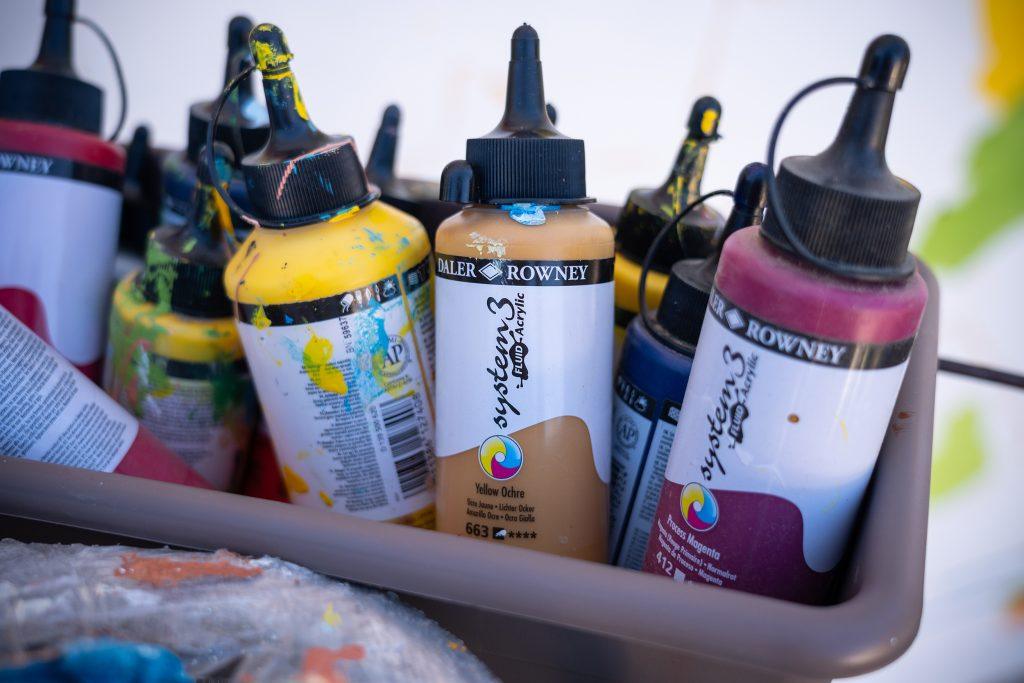
System3 Collection: Which Acrylic Are You?
Acrylic paint is one of the most versatile mediums available, offering vibrant colour, rapid drying, and adaptability across surfaces. However, acrylics are not all the same-different formulations behave differently, and understanding their properties is key to selecting the right paint for your technique. -
 Colour Lab
Understanding Pigments in Fine Art Products: Properties, Behaviour, Safety, and Innovation
Pigments are the fundamental ingredients in fine art materials. Whether in acrylic, watercolour, oil, pastel, or ink, pigments determine colour, opacity, permanence, and even texture. -
 Colour Lab
Understanding the Colour Wheel & Basic Mixing Techniques
The colour wheel is a fundamental tool for artists working in any medium. Whether you're mixing paints, planning a palette, or simply experimenting with colour, understanding how colours relate to each other can help you create more harmonious and effective artwork. This guide explains the structure and purpose of the colour wheel and provides hands-on exercises to build your confidence in mixing and using colour. -
 Colour Lab
Getting to Grips with Colour: Mixing, Harmony and Contrast
Join our latest challenge exploring depth with texture. See how artists build dimension using mediums like gesso, pastels, and gel. -
 Colour Lab
How to Use Air Dry Clay with Silicone Molds & Gesso Primer
Red Rocking Bird shares practical hints for achieving sharp edges, clean lines, and flawless mould releases.
Frequently Asked Questions
How do you dispose of the tubes and paint?
Can the Watercolour Varnish be thinned and how should I do it?
What type of brush should I use should I use to apply varnish?
Why is the Watercolour Varnish difficult to apply?
What is the difference between lightweight and heavyweight drawing paper?
What is the difference between alla prima vs layered in oil painting?
How do you mix oil paint colours cleanly?
How do you choose the right watercolour paper?
How do you create soft and hard edges in watercolour?
How do you lift watercolour paint safely?
How do you use heavy body vs fluid acrylic?
How do you blend acrylics before they dry?
Canvas vs paper vs board: when to use each
Oil paint drying times: what to expect and why it varies
What does “fat over lean” mean when oil painting?
How do you glaze with oil paint?
How do you build layers when painting with oils?
Wet-on-wet vs wet-on-dry: when do you use each technique?
How do you layer watercolour without lifting previous paint?
How do you paint a clean watercolour wash (flat and graded)?
How do you control water for better watercolour results?
How do you glaze with acrylic for depth?
How do you layer acrylic paint cleanly?
How do you build texture with acrylics?
What paper should I use for watercolour?
Do I need solvents for oil painting?
Why is my oil painting cracking?
What’s the difference between pans and tubes?
Can I layer watercolour?
How do I stop blooms and backruns?
Why do my watercolours dry lighter than expected?
How do I stop streaks in acrylic paint?
Why do my acrylic colours look dull?
Can I use acrylic paint on any surface?
Why is my acrylic paint cracking?
How can I slow down acrylic drying time?
Why does my watercolour appear blotchy or uneven on paper?
How do I improve the water miscibility of the watermixable oils?
Why aren’t my water-mixable oil colours drying quickly enough?
Why is my watercolour paint too thick and hard to brush out?
Why are my oil colours drying too slowly?
Why are my oil colours too thick or difficult to brush out?
Why does my acrylic feel heavy or drag on the brush when painting?
Why is my acrylic paint drying too quickly?
Why does my acrylic paint dry too glossy?
How do I reduce the viscosity of the System3 Screen Printing Medium?
Why does my acrylic paint dry with a finish that is too matt?
Why is my acrylic or gesso too thick, gelatinous, or gloopy?
Do the Georgian Water Mixable Oils contain preservative Methylisothiazolinone and similar synthetic preservatives?
How do I update my preferences or subscribe to your newsletter?
How do I collaborate with/get sponsored by Daler-Rowney?
Where can I download your logo or product images/assets?
I didn’t receive any canvas wedges, where can I request them?
Do you sell other brands?
Can I buy directly from you?
Am I able to order samples?
Do you test on animals or use animal-derived ingredients?
What is the Fine Art Trade Guild?
I have scanned the QR code on the back of the Screen Printing kit product packaging but it does not lead anywhere?
I have scanned the QR code on the back of the product packaging but it does not lead anywhere?
How do I contribute a new how-to to your techniques page?
How do I find out more information about old products?
How do you preserve the longevity of finished artworks on paper?
How do I attach the canvas wedges?
How long do you need to leave an oil painting before varnishing?
I would like to try a medium, what would you advise?
How do you revive paint?
How do you open the Fluid Acrylics tubes?
To open the 250ml and 500ml Fluid Acrylic or many of our larger size paint tubes, cut along the top line as indicated in the image.

My art masking fluid is coagulation and thickening, what should I do?
What do the terms pigments and solvents mean?
What does FSC® mean?
What does hue mean?
A hue is the actual colour of something. A term often used to refer to the dominant pure colour within a colour.

How do you prepare paper and seal your artwork?
How do you prevent your drawings smudging?
How do you remove sheets from blocks?
Why is my paper buckling & how do you minimise it?
What are the available formats for artist papers?
What are archival papers?
Why are there so many shades of white for papers?
What are the variety of artist papers available and their key features?
What are the ingredients of artist papers?
What are the differences between white/natural and coloured paper for finished artworks?
What does is the difference between smooth and textured paper?
What does sizing and paper weights mean?
How are artist papers manufactured?
How do pastels stick to papers?
What technique is not supported by mixed media papers?
What are the characteristics of mixed media paper?
What techniques are best used on drawing and sketching papers?
What is the difference between the different weights of the Fine Grain paper range?
Why are acid-free papers important for artists?
Are your surfaces acid-free?
Do your products contain per-and polyfluoroalkyl substances?
What do the surface symbols mean on your paints?
The symbols represent where the paint can be used, for example, Canvas, Murals, Glass, Textiles, and Interior/Exterior. Please visit the colour charts on the individual product pages to view the full list.
You will need to use the correct primers and finishes for a selection of surfaces, i.e., murals will need a varnish to make them waterproof and a primer on most wall surfaces to get the full colour. We do always recommend trialling on a small area and testing first.

Are your products non-hazardous?
What type of palette should you use with which type of paint?
What is the difference between artists and student colours?
What do all the different mediums do?
What is the difference between all our inks?
What is the difference between the different whites in our ranges?
What is the advantage of using the products in the same collections for artists?
What do I do if my ink is seperated?
Why is the System3 collection good for murals?
How many times is the colour milled to create Georgian oils?
How do I paint on plastic using acrylic paints?
What medium would you recommend to a beginner watercolour artist to try out alongside Aquafine watercolour paints for some great effects?
What medium could you thin your oil paint down with and at the same time slow down the drying time?
What oils do you use in your oil paints?
What is drying oil?
Do your watercolour paints have granulation and staining properties?
How should I take care of my artist brushes?
What filament is best for what technique?
The filament of a brush can be suitable for more than one technique. This table indicates the prime technique for each filament type, but also provides a guide of suitability for the others.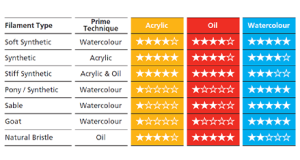
Can you explain what the different brush types do?
Would your products affect any allergies that I may have?
What does the hazardous symbol on the label mean?
The hazardous symbols are attributed to substances that are hazardous to the environment – these are standard symbols on artist paints.
The most standard symbol on art products is a dead tree and a dead fish symbol. This symbol means the product is toxic to marine life with long-lasting effects. Our recommendation when cleaning your products is to put the washings into a sand bin rather than down the sink.

Are your products EN71 compliant?
What are the shelf lives of your paints?
What’s the difference between water-based v solvent – based paints and why preservatives are used?
Do you sell a colour wheel?
Where can I download a product’s colour chart?
What levels are your products?
Where can I find your latest Safety Datasheets (SDS) or Technical Data sheets (TDS)
How should I store sketchbooks and drawings?
What is the difference between sketching pencils and coloured pencils?
Can I mix media on drawing paper?
What is the benefit of using different paper textures?
Why does my paper buckle when using wet media?
What is the best paper for beginners?
Can I erase easily on drawing paper?
What is the difference between sketchbooks in the range?
What drawing materials work best on Daler-Rowney sketchbooks?
Can I use watercolour on drawing paper?
What is the difference between smooth and textured drawing paper?
What is cartridge paper used for?
Can I use ink or markers on drawing paper?
What is “tooth” in drawing paper?
What is the difference between sketch paper and drawing paper?
What can I use drawing and sketching paper for?

Find a Store Near You
Our products are available in thousands stores nationwide. Use our Store Locator to find your nearest retailer and explore our network of trusted art supply specialists. Visit in person to experience the quality firsthand, receive expert advice, and shop your favourite Daler-Rowney products locally.

Contact Us
Got a question? Start by browsing our FAQs for quick answers. If you can’t find what you’re looking for, get in touch by selecting the form that best matches your enquiry. We’d love to hear from you and are always happy to assist!


