


FW Acrylic Ink Pouring Medium


FW Acrylic Ink Pouring Medium
FW Acrylic Ink Pouring Medium is specially designed to work with acrylic inks, preserving their bright, intense pigments for vibrant pouring effects. It mixes easily with FW Acrylic Inks, as well as System3 and Aquafine inks, to create a smooth, flowing consistency ideal for pouring techniques.
Made with high-quality resins, this medium dries to a durable, waterproof gloss finish that is self-levelling, non-yellowing, and resistant to scratches. It won’t craze, crack, or trap bubbles and is suitable for use on canvas, wood, and other primed surfaces. Made in the UK.
- Creates magnificent cells and outstanding effects
- Optimised for use with acrylic inks, maintaining pigment vibrancy
- Dries to a durable, waterproof, gloss finish
- Self-levelling, non-yellowing, and scratch-resistant
- Resists crazing, cracking, and bubbles during drying
- Suitable for canvas, wood, and primed surfaces
About FW Acrylic Ink Pouring Medium
Pouring Techniques
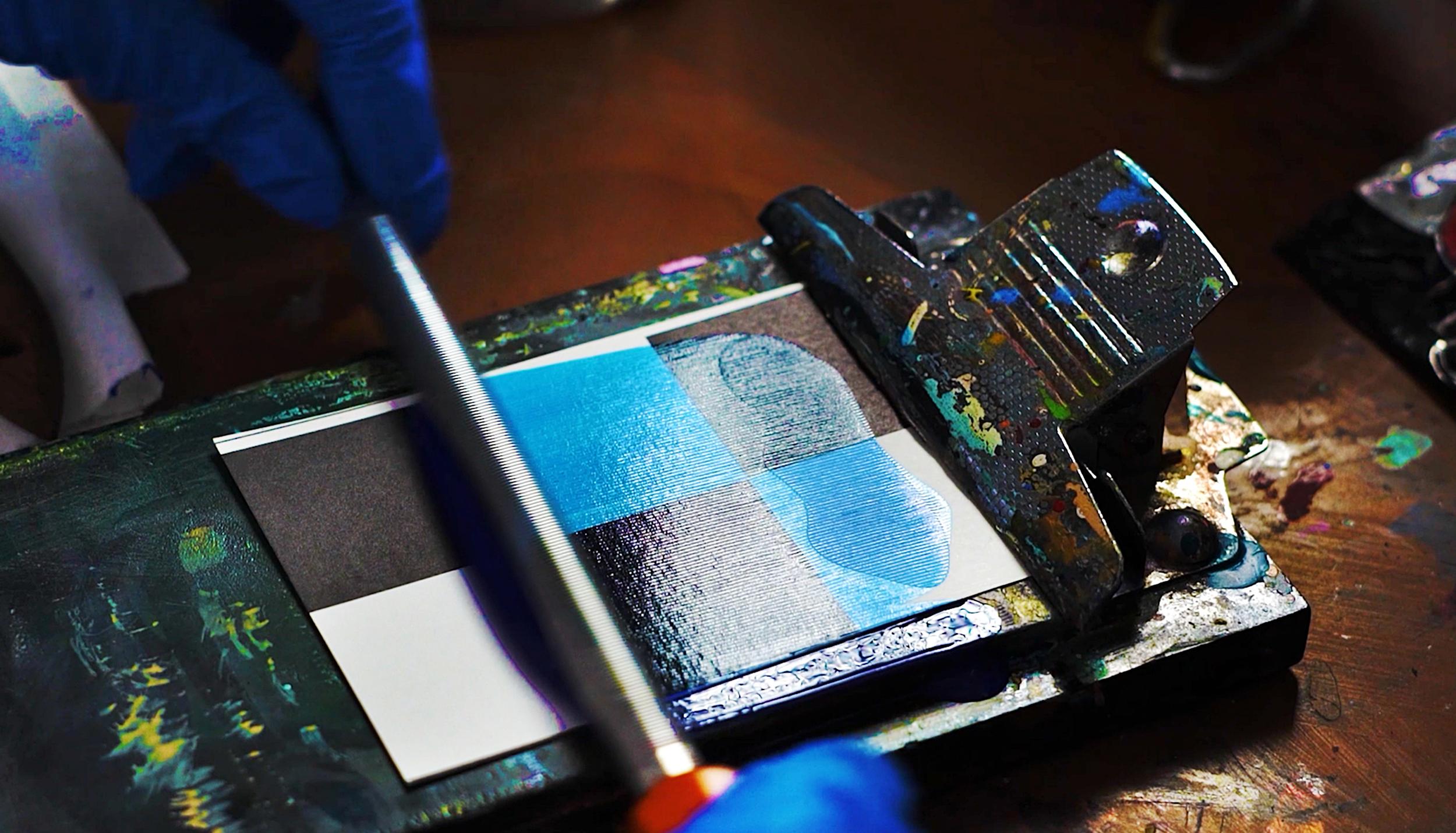
Prepare as many colours as you like upfront. To test the fluidity, simply lift the pallet knife out of the mixture and if the mixture flows smoothly off of the pallet knife you are ready to pour.
For a Traditional Pour, premix your colours and add each one to the desired surface separately. You can keep adding colours until you are happy with the finished product.
To Dirty Pour just combine multiple premixed colours into one container and pour from there. The colours will mix and flow around each other creating interesting and beautiful patterns that are difficult to recreate with a traditional pour.
Puddle Pouring relies on adding colours in a controlled manner to the centre of the colour you have just added. The circles will expand and press against each other without mixing too much.
Flip Cup is similar to the Dirty Pour, but rather than pouring the mixture, the container is flipped onto the canvas with the canvas acting as a lid. Then after settling, the cup is lifted off and the paint combines into new shapes.
Directions
It is recommended to start by mixing 1-part FW ink to 1 part FW Pouring Medium then add more pouring medium or colour to suit your pouring preference. Mix until it flows at the required consistency, for beginners you want it like double cream consistency as a base viscosity. Then pour the colours over the chosen surface.
Place your canvas with the pouring art on a flat surface and let it dry for 24 hours. We would recommend applying a shockproof clear varnish to protect your design and get it ready for display.
Downloads
FW Pouring Medium Safety Data Sheet (SDS)
-
FW Pouring Medium Safety Data Sheet (SDS)
Resources
-

Clarice Gomes
Clarice Gomes is a watercolour artist, author and retreat host known for her pretty, romantic and loose style, using nature-inspired painting to encourage creativity, calm and connection. -
VIN + OMI x ‘JORD’
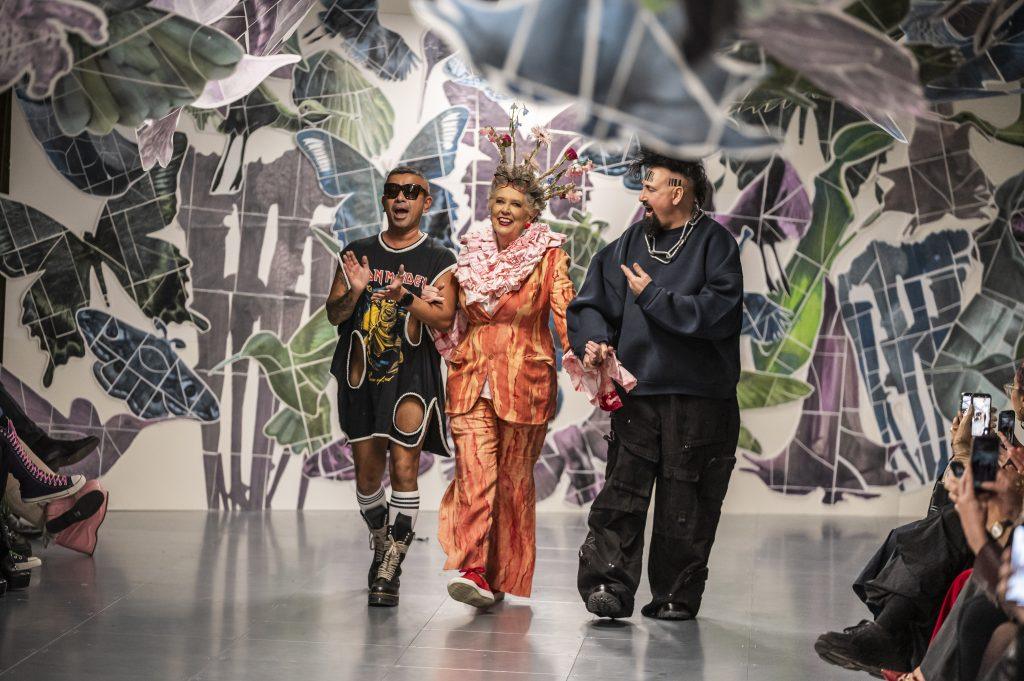
In February 2026, Daler-Rowney supported the VIN + OMI show JORD: Bring Back Nature, presented ahead of London Fashion Week. -

Elsabé Ebersöhn
Elsabé Ebersöhn is a South African artist, illustrator, and art educator whose creative practice is deeply rooted in everyday life, nature, and accessibility. As a mother of two energetic boys, Elsabé understands the realities of a busy life and believes that creativity should be something that fits into daily routines, not something reserved for a perfect studio or uninterrupted hours. -

Richard Chipperfield
Richard Chipperfield is a sci-fi, fantasy and horror painter working with UV-reactive acrylics, combining airbrush and traditional techniques to create bold, high-impact imagery inspired by classic genre art and cinema. -

VIN + OMI x ‘Dysphoriana’
On 18th September 2025, Daler-Rowney’s repurposed art materials took to the catwalk at VIN + OMI’s Dysphoriana show, opening London Fashion Week at the Art’otel Hoxton. -

Helen Wells
Helen Wells is a professional artist, author, and teacher. She creates vibrant, expressive artwork that blends intuitive marks with thoughtful design. -

VIN + OMI x ‘Omnia’
Omnia, the new fashion catwalk of the award-winning designer duo, VIN + OMI, took place on the 11th of September in the 101 Hotel in Shoreditch, London. -
 Colour Lab
Realistic Portrait Painting using an AirBrush with Dave Pinsker
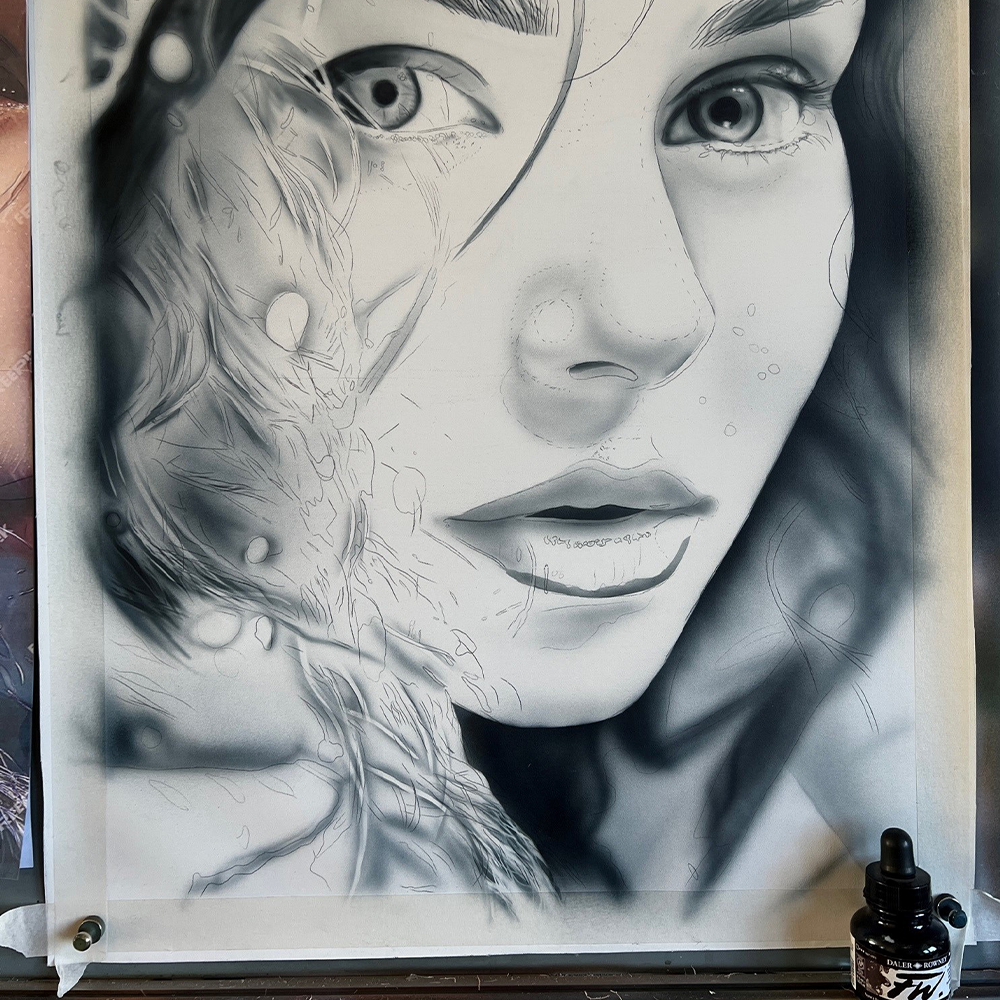
An airbrush is a small, handheld tool used for painting and detailing various surfaces such as paper, canvas, metal, or plastic. It operates by spraying a fine mist of paint or ink onto the desired surface, allowing for precise control over shading, gradients, and detail work.
Related Products

FW Epoxy Hardener Medium

FW Epoxy Resin Medium

FW Acrylic Epoxy Resin Medium 1lt Bundle

FW Acrylic Epoxy Resin Medium 250ml Bundle
-
Acrylic Mediums
FW Epoxy Hardener Medium
FW Epoxy Hardener is used in conjunction with Epoxy Resin to create an optically clear, high gloss finish resin art. It has been optimised so that the high loaded pigments used in FW inks will create bright and vibrant resin art. It has excellent UV resistance, clarity and transparency making the FW epoxy system particularly […]LEARN MORE -
Acrylic Mediums
FW Epoxy Resin Medium
FW Epoxy Resin is designed to be mixed 1:1 with FW Epoxy Hardener to produce an optically clear, high-gloss finish. Optimised for use with FW Acrylic Inks, it enhances colour vibrancy while offering excellent UV resistance and long-lasting clarity, making it ideal for protecting and decorating paintings, sculpture, and mixed media pieces. The resin is […]LEARN MORE -
Acrylic Mediums
FW Acrylic Epoxy Resin Medium 1lt Bundle
The FW Acrylic Epoxy Resin Medium 1lt Bundle includes Epoxy Resin & Hardener. The FW Epoxy Resin, used with FW Epoxy Hardener, creates an optically clear, high-gloss resin finish ideal for vibrant resin art. Formulated to enhance the high pigment load of FW Acrylic Inks, this resin offers excellent UV resistance, clarity, and transparency, making […]LEARN MORE -
Acrylic Mediums
FW Acrylic Epoxy Resin Medium 250ml Bundle
The FW Acrylic Epoxy Resin Medium 250ml Bundle includes Epoxy Resin & Hardener. The FW Epoxy Resin, used with FW Epoxy Hardener, creates an optically clear, high-gloss resin finish ideal for vibrant resin art. Formulated to enhance the high pigment load of FW Acrylic Inks, this resin offers excellent UV resistance, clarity, and transparency, making […]LEARN MORE
FAQs
Can the Watercolour Varnish be thinned and how should I do it?
What type of brush should I use should I use to apply varnish?
Why is the Watercolour Varnish difficult to apply?
How do you glaze with oil paint?
How do you glaze with acrylic for depth?
Do I need solvents for oil painting?
How can I slow down acrylic drying time?
Why does my watercolour appear blotchy or uneven on paper?
How do I improve the water miscibility of the watermixable oils?
Why aren’t my water-mixable oil colours drying quickly enough?
Why is my watercolour paint too thick and hard to brush out?
Why are my oil colours drying too slowly?
Why are my oil colours too thick or difficult to brush out?
Why does my acrylic feel heavy or drag on the brush when painting?
Why is my acrylic paint drying too quickly?
Why does my acrylic paint dry too glossy?
How do I reduce the viscosity of the System3 Screen Printing Medium?
Why does my acrylic paint dry with a finish that is too matt?
Why is my acrylic or gesso too thick, gelatinous, or gloopy?
Am I able to order samples?
Do you test on animals or use animal-derived ingredients?
I have scanned the QR code on the back of the product packaging but it does not lead anywhere?
How do I find out more information about old products?
How long do you need to leave an oil painting before varnishing?
I would like to try a medium, what would you advise?
How do you revive paint?
My art masking fluid is coagulation and thickening, what should I do?
How do you prepare paper and seal your artwork?
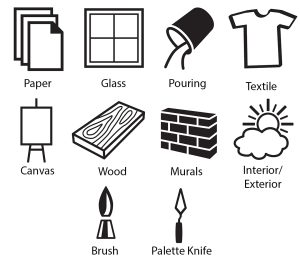
What do the surface symbols mean on your paints?
The symbols represent where the paint can be used, for example, Canvas, Murals, Glass, Textiles, and Interior/Exterior. Please visit the colour charts on the individual product pages to view the full list.
You will need to use the correct primers and finishes for a selection of surfaces, i.e., murals will need a varnish to make them waterproof and a primer on most wall surfaces to get the full colour. We do always recommend trialling on a small area and testing first.
Are your products non-hazardous?
What do all the different mediums do?
What is the advantage of using the products in the same collections for artists?
Why is the System3 collection good for murals?
How do I paint on plastic using acrylic paints?
What medium would you recommend to a beginner watercolour artist to try out alongside Aquafine watercolour paints for some great effects?
What medium could you thin your oil paint down with and at the same time slow down the drying time?
What is drying oil?
Would your products affect any allergies that I may have?
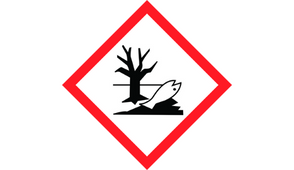
What does the hazardous symbol on the label mean?
The hazardous symbols are attributed to substances that are hazardous to the environment – these are standard symbols on artist paints.
The most standard symbol on art products is a dead tree and a dead fish symbol. This symbol means the product is toxic to marine life with long-lasting effects. Our recommendation when cleaning your products is to put the washings into a sand bin rather than down the sink.
Are your products EN71 compliant?
What are the shelf lives of your paints?
What levels are your products?
Where can I find your latest Safety Datasheets (SDS) or Technical Data sheets (TDS)

Find a Store Near You
Our products are available in thousands stores nationwide. Use our Store Locator to find your nearest retailer and explore our network of trusted art supply specialists. Visit in person to experience the quality firsthand, receive expert advice, and shop your favourite Daler-Rowney products locally.

Contact Us
Got a question? Start by browsing our FAQs for quick answers. If you can’t find what you’re looking for, get in touch by selecting the form that best matches your enquiry. We’d love to hear from you and are always happy to assist!


