


Adigraf Block Printing Water Soluble Ink


Adigraf Block Printing Water Soluble Ink
Adigraf Water Soluble Block Printing Inks deliver bold, highly pigmented colours ideal for block, woodcut, and lino printing. These fast-drying inks are safe and easy to use, cleaning up simply with soap and water. They work well on canvas, paper, primed surfaces, and are perfect for overprinting.
Designed to dissolve in water, these inks can be thinned and cleaned up effortlessly. Leftover colour can be saved by scraping into an airtight container for reuse. Made in England to meet all your block printing needs.
- Highly pigmented, fast-drying water soluble inks
- Simple, safe clean-up with soap and water
- Suitable for canvas, paper, primed surfaces, and overprinting
- Available in 59ml and 150ml
- Made in the UK
Lightfastness
Permanent
Moderately Permanent
Normally Permanent
Fugitive
Transparency
Opaque
Semi - opaque
Transparent
Brilliant Yellow
Product Code
D185059607
Code
607
Pigment
PY3
Opacity
Lightfastness
Deep Yellow
Product Code
D185059618
Code
618
Pigment
PY1 / PO34 / PW6
Opacity
Lightfastness
Orange
Product Code
D185059660
Code
660
Pigment
PO34 / PY1 / PW6
Opacity
Lightfastness
Brilliant Red
Product Code
D185059547
Code
547
Pigment
PR112
Opacity
Lightfastness
Crimson
Product Code
D185059513
Code
513
Pigment
PR146
Opacity
Lightfastness
Magenta
Product Code
D185059409
Code
409
Pigment
Fluorescent Pink 1 / PR122
Opacity
Lightfastness
Violet
Product Code
D185059450
Code
450
Pigment
PW6 / PV23 / PB29
Opacity
Lightfastness
Prussian Blue
Product Code
D185059135
Code
135
Pigment
PB27
Opacity
Lightfastness
Brilliant Blue
Product Code
D185059100
Code
100
Pigment
PB29 / PW6
Opacity
Lightfastness
Turquoise
Product Code
D185059145
Code
145
Pigment
PW6 / PB15:3 / PY3
Opacity
Lightfastness
Brilliant Green
Product Code
D185059309
Code
309
Pigment
PBk11 / PG17 / PG7
Opacity
Lightfastness
Leaf Green
Product Code
D185059355
Code
355
Pigment
PY1 / PW6 / PG7
Opacity
Lightfastness
Yellow Ochre
Product Code
D185059663
Code
663
Pigment
PY42
Opacity
Lightfastness
Burnt Sienna
Product Code
D185059221
Code
221
Pigment
PR101
Opacity
Lightfastness
Raw Umber
Product Code
D185059247
Code
247
Pigment
PBr7
Opacity
Lightfastness
Grey
Product Code
D185059065
Code
065
Pigment
PW6 / PBk11
Opacity
Lightfastness
Black
Product Code
D185059026
Code
026
Pigment
PBk6 / PB29 / PBk11
Opacity
Lightfastness
White
Product Code
D185059011
Code
011
Pigment
PW6
Opacity
Lightfastness
Silver
Product Code
D185059702
Code
702
Pigment
PW6*
Opacity
Lightfastness
Gold
Product Code
D185059701
Code
701
Pigment
PW6* / PR101 Trans.
Opacity
Lightfastness
Fluorescent Yellow
Product Code
D185059681
Code
681
Pigment
Fluorescent Yellow 27
Opacity
Lightfastness
Fluorescent Red
Product Code
D185059544
Code
544
Pigment
Fluorescent Red 3
Opacity
Lightfastness
Fluorescent Pink
Product Code
D185059538
Code
538
Pigment
Fluorescent Pink 1 / PW6
Opacity
Lightfastness
Fluorescent Blue
Product Code
D185059123
Code
123
Pigment
Fluorescent Blue 60 / PW6
Opacity
Lightfastness
About Adigraf Block Printing Water Soluble Ink
Transferring Your Design
Squeeze a small amount of paint onto a glass plate, and spread the ink out evenly with an ink roller until you have an even layer of paint on the roller. Then with the inked-up roller, roll over the lino print until the design is covered evenly. If you are printing at home, for beginners, we recommend placing the paper on top of your printing plate and using a spoon, clean ink roller or baren to move over the paper to distribute the paint evenly. If you are an advanced block printer, we recommend using the registration technique, such as the taped corner method by applying pins, and tabs. For professional results, we recommend using a press or visiting a professional block printing studio.
Wide Range of Surfaces
Paper: For best results, use paper with a weight of 250gsm or higher. A smooth, absorbent surface will help achieve clean, crisp prints and consistent ink coverage.
Textile: You can print on natural fabrics such as cotton, linen, hemp, or bamboo. However, please note that the printed result is not washable – colours will fade if laundered. Always test on a small section of fabric first to ensure you’re happy with the finish.
Canvas: For optimum results when printing on canvas, we recommend using FW Mixed Media Canvases, which feature a rigid cardboard backing for improved registration and a clearer print. If using a traditional stretched canvas, ensure it is fully tightened with the supplied wedges and supported underneath during printing.
Other Surfaces: Adigraf printing plates can also be used on non-traditional surfaces such as wood, brick, or walls. We advise testing on a small area first to ensure satisfactory results. Please note: both Adigraf Oil and Water-Soluble Block Printing Inks are recommended for indoor use only.
Downloads

Adigraf Water Soluble Block Printing Inks – Colour Chart
Adigraf Water Based Colour Safety Data Sheet (SDS)
-
Adigraf Water Soluble Block Printing Inks – Colour Chart
-
Adigraf Water Based Colour Safety Data Sheet (SDS)
Resources
-

Jotaká
Valencia-based illustrator Jotaká works across digital and traditional media, creating character-led artwork for global brands while developing personal projects in ceramics and drawing. -

Ella Flavell
Ella Flavell is a linocut printmaker based in the West Midlands. -

Rosanna K Morris
Rosanna is a printmaker and illustrator working in the south west of England from her custom made printmaking studio. -

Jenny Muncaster
Jenny Muncaster graduated from Winchester School of Art in 1988 with a Hons Degree in Printed Textiles.
Related Products

Adigraf Block Printing Oil Colour

Adigraf Block Printing Water Soluble Ink 59ml Set

Adigraf Block Printing Oil Medium

Adigraf Block Printing Acrylic Medium
-
Oils
Adigraf Block Printing Oil Colour
Adigraf Oil Block Printing Inks are made with high-quality pigments to deliver rich, professional-grade colour for block, lino, and woodcut printing. These oil-based inks offer greater durability than water-soluble alternatives and should be left to dry overnight before overprinting. Suitable for use on canvas, paper, and primed surfaces, the core range of five colours can […]LEARN MORE -
Inks
Adigraf Block Printing Water Soluble Ink 59ml Set
The Adigraf Water Soluble Block Printing Ink Mixing Set includes six essential colours – Brilliant Yellow, Brilliant Red, Brilliant Blue, Black, White, and Gold – offering a versatile palette for a wide range of designs and prints. Ideal for high-pressure techniques such as block, woodcut, and lino printing, these highly pigmented inks dry significantly faster […]LEARN MORE -
Printing Mediums
Adigraf Block Printing Oil Medium
Adigraf Oil Block Printing Medium transforms traditional oil paints into vibrant, high-quality inks ideal for block, lino, and relief printing. Designed to be mixed with Georgian Oil paints at a ratio of 1.5 parts medium to 1 part paint, this medium offers a convenient and cost-effective way to create bespoke printing inks without purchasing a […]LEARN MORE -
Printing Mediums
Adigraf Block Printing Acrylic Medium
Adigraf Acrylic Block Printing Medium transforms acrylic paint into suitable inks for block and lino printing. Specially designed to mix with System3 Acrylics at a ratio of 1.5 parts medium to 1 part paint, it produces water-based, solvent-free inks ideal for block, lino, and relief printing. This medium offers a cost-effective and accessible way to […]LEARN MORE
FAQs
How do you dispose of the tubes and paint?
Can the Watercolour Varnish be thinned and how should I do it?
What type of brush should I use should I use to apply varnish?
Why is the Watercolour Varnish difficult to apply?
What is the difference between alla prima vs layered in oil painting?
How do you mix oil paint colours cleanly?
How do you choose the right watercolour paper?
How do you create soft and hard edges in watercolour?
How do you lift watercolour paint safely?
How do you use heavy body vs fluid acrylic?
How do you blend acrylics before they dry?
Oil paint drying times: what to expect and why it varies
What does “fat over lean” mean when oil painting?
How do you glaze with oil paint?
How do you build layers when painting with oils?
Wet-on-wet vs wet-on-dry: when do you use each technique?
How do you layer watercolour without lifting previous paint?
How do you paint a clean watercolour wash (flat and graded)?
How do you control water for better watercolour results?
How do you glaze with acrylic for depth?
How do you layer acrylic paint cleanly?
How do you build texture with acrylics?
What paper should I use for watercolour?
Do I need solvents for oil painting?
Why is my oil painting cracking?
What’s the difference between pans and tubes?
Can I layer watercolour?
How do I stop blooms and backruns?
Why do my watercolours dry lighter than expected?
How do I stop streaks in acrylic paint?
Why do my acrylic colours look dull?
Can I use acrylic paint on any surface?
Why is my acrylic paint cracking?
How can I slow down acrylic drying time?
Why does my watercolour appear blotchy or uneven on paper?
How do I improve the water miscibility of the watermixable oils?
Why aren’t my water-mixable oil colours drying quickly enough?
Why is my watercolour paint too thick and hard to brush out?
Why are my oil colours drying too slowly?
Why are my oil colours too thick or difficult to brush out?
Why does my acrylic feel heavy or drag on the brush when painting?
Why is my acrylic paint drying too quickly?
Why does my acrylic paint dry too glossy?
How do I reduce the viscosity of the System3 Screen Printing Medium?
Why does my acrylic paint dry with a finish that is too matt?
Why is my acrylic or gesso too thick, gelatinous, or gloopy?
Do the Georgian Water Mixable Oils contain preservative Methylisothiazolinone and similar synthetic preservatives?
Am I able to order samples?
Do you test on animals or use animal-derived ingredients?
I have scanned the QR code on the back of the Screen Printing kit product packaging but it does not lead anywhere?
I have scanned the QR code on the back of the product packaging but it does not lead anywhere?
How do I find out more information about old products?
How long do you need to leave an oil painting before varnishing?
How do you revive paint?
How do you open the Fluid Acrylics tubes?
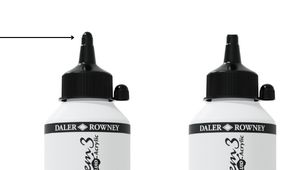
To open the 250ml and 500ml Fluid Acrylic or many of our larger size paint tubes, cut along the top line as indicated in the image.
What do the terms pigments and solvents mean?
What does hue mean?
A hue is the actual colour of something. A term often used to refer to the dominant pure colour within a colour.
Why is my paper buckling & how do you minimise it?
Do your products contain per-and polyfluoroalkyl substances?
What do the surface symbols mean on your paints?
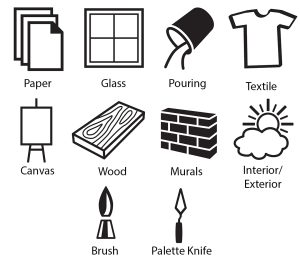
The symbols represent where the paint can be used, for example, Canvas, Murals, Glass, Textiles, and Interior/Exterior. Please visit the colour charts on the individual product pages to view the full list.
You will need to use the correct primers and finishes for a selection of surfaces, i.e., murals will need a varnish to make them waterproof and a primer on most wall surfaces to get the full colour. We do always recommend trialling on a small area and testing first.
Are your products non-hazardous?
What type of palette should you use with which type of paint?
What is the difference between artists and student colours?
What is the difference between all our inks?
What is the difference between the different whites in our ranges?
What is the advantage of using the products in the same collections for artists?
What do I do if my ink is seperated?
What medium would you recommend to a beginner watercolour artist to try out alongside Aquafine watercolour paints for some great effects?
What medium could you thin your oil paint down with and at the same time slow down the drying time?
What oils do you use in your oil paints?
Do your watercolour paints have granulation and staining properties?
Would your products affect any allergies that I may have?
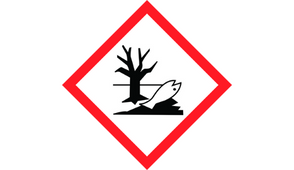
What does the hazardous symbol on the label mean?
The hazardous symbols are attributed to substances that are hazardous to the environment – these are standard symbols on artist paints.
The most standard symbol on art products is a dead tree and a dead fish symbol. This symbol means the product is toxic to marine life with long-lasting effects. Our recommendation when cleaning your products is to put the washings into a sand bin rather than down the sink.
Are your products EN71 compliant?
What are the shelf lives of your paints?
What’s the difference between water-based v solvent – based paints and why preservatives are used?
Do you sell a colour wheel?
Where can I download a product’s colour chart?
What levels are your products?
Where can I find your latest Safety Datasheets (SDS) or Technical Data sheets (TDS)

Find a Store Near You
Our products are available in thousands stores nationwide. Use our Store Locator to find your nearest retailer and explore our network of trusted art supply specialists. Visit in person to experience the quality firsthand, receive expert advice, and shop your favourite Daler-Rowney products locally.

Contact Us
Got a question? Start by browsing our FAQs for quick answers. If you can’t find what you’re looking for, get in touch by selecting the form that best matches your enquiry. We’d love to hear from you and are always happy to assist!


